Learner
Gardening and Food Sovereignty
8/8/26
Today I took a 3 hour class on soil testing via the Penn State Extension of the Master Gardener’s porgram, at the Agriculture Resource Center by Farm Philly.
I’ve got a yard full of poison ivy and tree of heaven that I’m going to be working on for a while before I can grow anything. In the mean time I’m educating myself on gardening. I want to learn about safely growing fruits and veggies, herbs. I also want to learn about native pollinator gardens, rain gardens, and gardening that supports birds.
Here’s what I’ve learned so far:
What is soil?
Soil - smells like earth, has a soil structure with organic matter and living organisms, and minerals (clay, silt, sand) that sustain plants
What is not soil?
Potting mix or soil less medium/mix - pearlite, good for seed starting and containers, no nutrients, not for a garden bed
Vermicompost - worm castings, dark in colr, tiny ball as structure, has no mineral content and way too much organic content, potentially lot of pathogens, dries out quickly
Sand - red/orange/brown in color, gritty, no nutrients, no organic matter, dries out quickly
Why does soil matter?
Filter water
It is a steward for organisms, plants, food - ultimately us!
The ideal soil pie chart:
45% mineral: sand, silt, clay
5% organic matter - carbon and nutrients plants need. (typically found at between 1-3%), no more than 5%!
Air & Water - really important to have space for water to infiltrate and move through
Soil health
Structure - how much space
Aggregate - how does it clump together, chunks not uniform, signs of life (worms, beetles)
Soil is bound by ‘stuff’ that is exuded by plants and creatures (like earthworms)
Infiltration - measures how water move through soil. Want it to hold moisture but not too much.
Air - oxygen, space is created by living creatures and roots.
pH - extremely important! How alkaline or acidic is the soil? Plants (not all) generally like a pH at 6 or 7.
Soil has a charge! Negatively charged soil is good, so that it can grab positively charged mineral
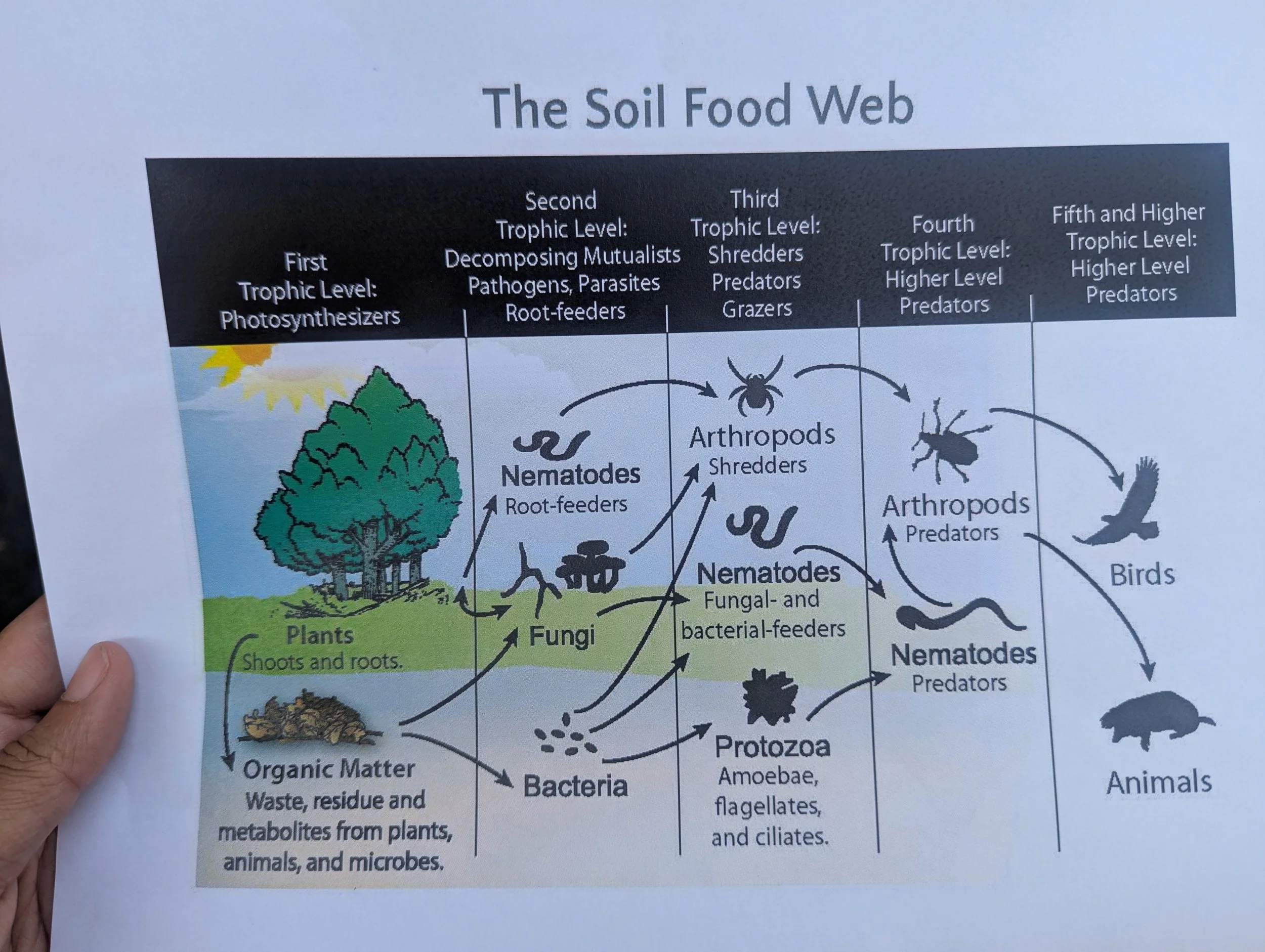
Soil is alive, soil is food web with fungi/bacteria
Only want a limit of organic matter 1-5 %
Soil needs to have a variety of structure and shapes of aggregate
It is important to not compact the soil! Practices that prevent compacting soil are:
Not walking on it when it is wet
Add organic matter to bind and create aggregate, but not too much
Avoid tilling because it damages soil structure
Instead you can use Cover crops that breaks up compaction - like tillage radish!
For home gardens in the city, a broad fork is a useful tool to create channels
Limit bare soil - if not planting, then use cover crops to improve soil, like clover. You can also use mulch, grass clippings, leaves, cardboard.
Grow a diversity of things, more biodiverse soil
Container gardening
Native soil is too heavy - use pearlite, compost
Requires watering more, fertilizing more
Want 30 mineral, 70 compost
most places offering it is 70 mineral / 30 compost
most big box store mixes are too high in soluble salt
Bennett compost makes soil, might be acidic because of high coffee content, so make a soil and potting mix
No more than 1 inch of compost per year! Too much organic matter/compost can be damaging.
We then did hands on activities to learn how to examine soil informally:
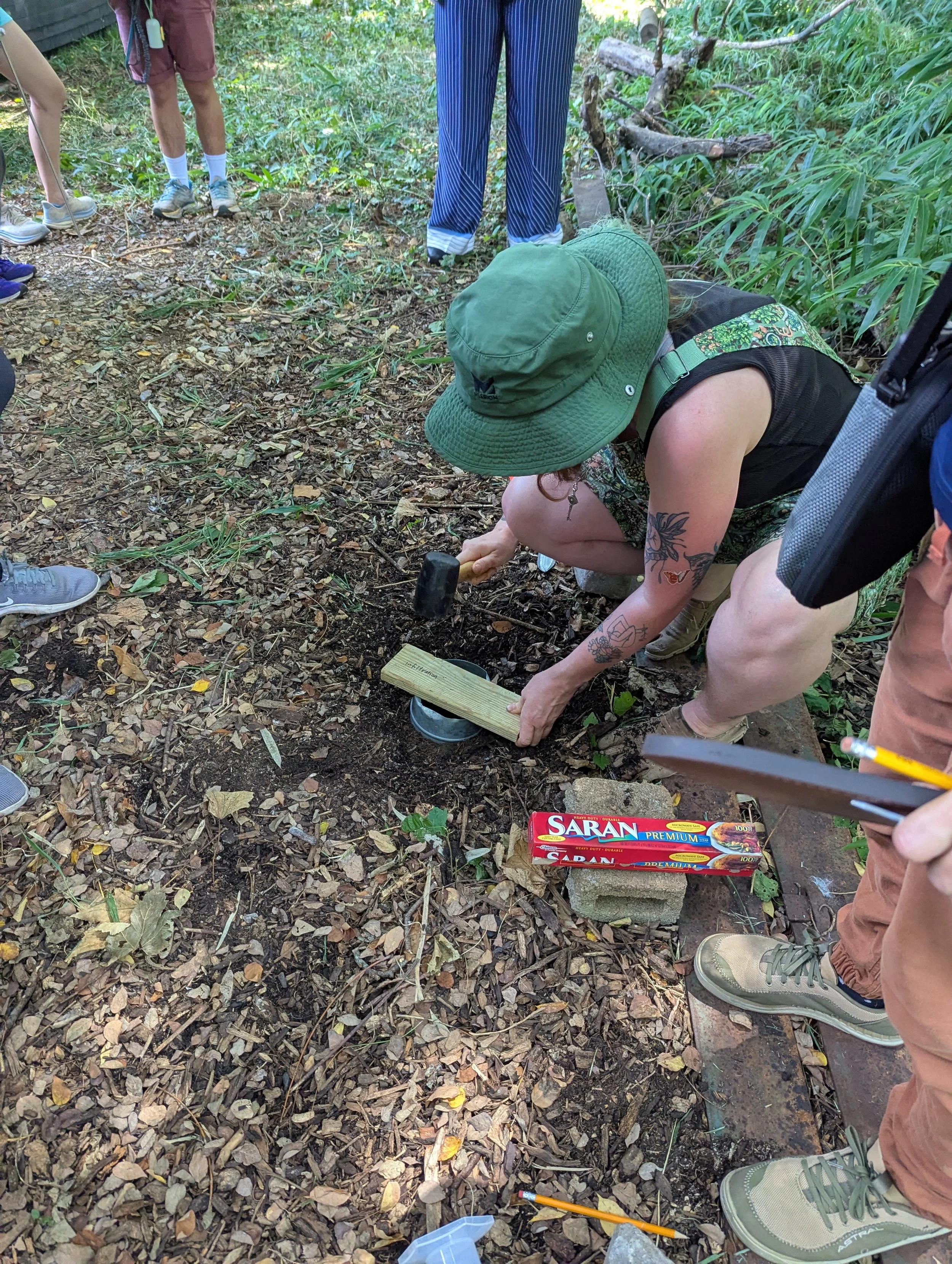
Infiltration - how fast the water is going in over time
Too fast creates loss, erosion, runoff
Method: Ring + plastic + 1 inch of water
34s
2:18
pH - often the cause of yellowing, not vigorously growing
Determined which nutrients are available for plants
Less than 7 - acidic
More than 7 - basic
Pull sample where the roots are - 6-8 inches
equal parts soil and distilled water, shake for at least 30s, let it settle for 10 minutes, and then test only the water
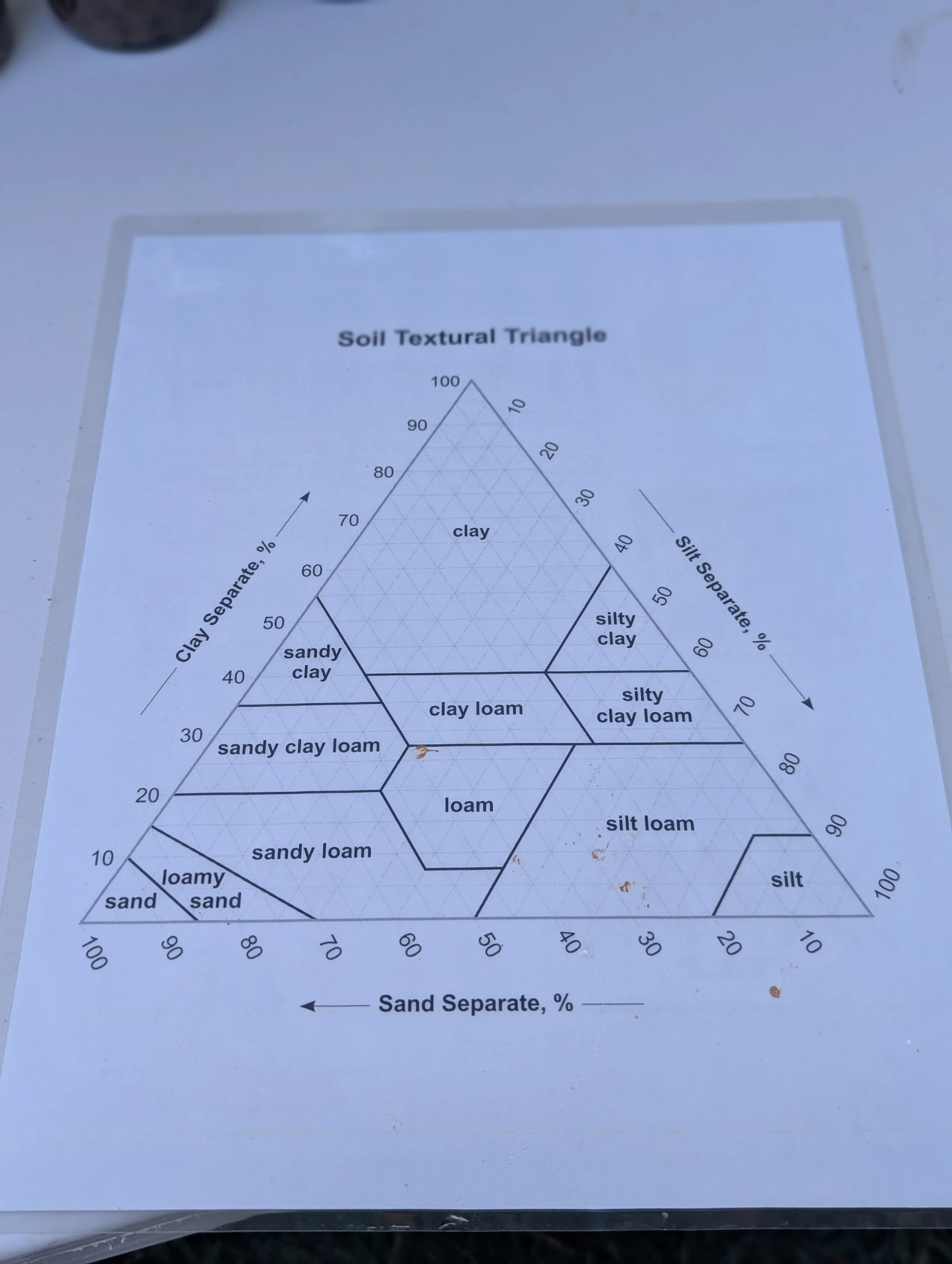
Soil Texture
Mineral content is what gives the texture: sand, silt, and clay
Fill half the jar with soil, half with water
Shake for a loooong time really hard
Measure total depth of soil at first, measure sand depth at 30 seconds, then measure silt/clay after 30 minutes
You cannot change your soil texture, but can change the structure (how these materials clump together)
Clay is negatively charged and holds onto nutrients well
Higher sand content requires watering more frequently and less each time
Clay will hold water, so water in pulses and less often
Types of soil testing at the Penn State soil lab
Fertility testing for mineral content
Phosphorus, potassium, magnesium, calcium
This informs how you are fertilizing
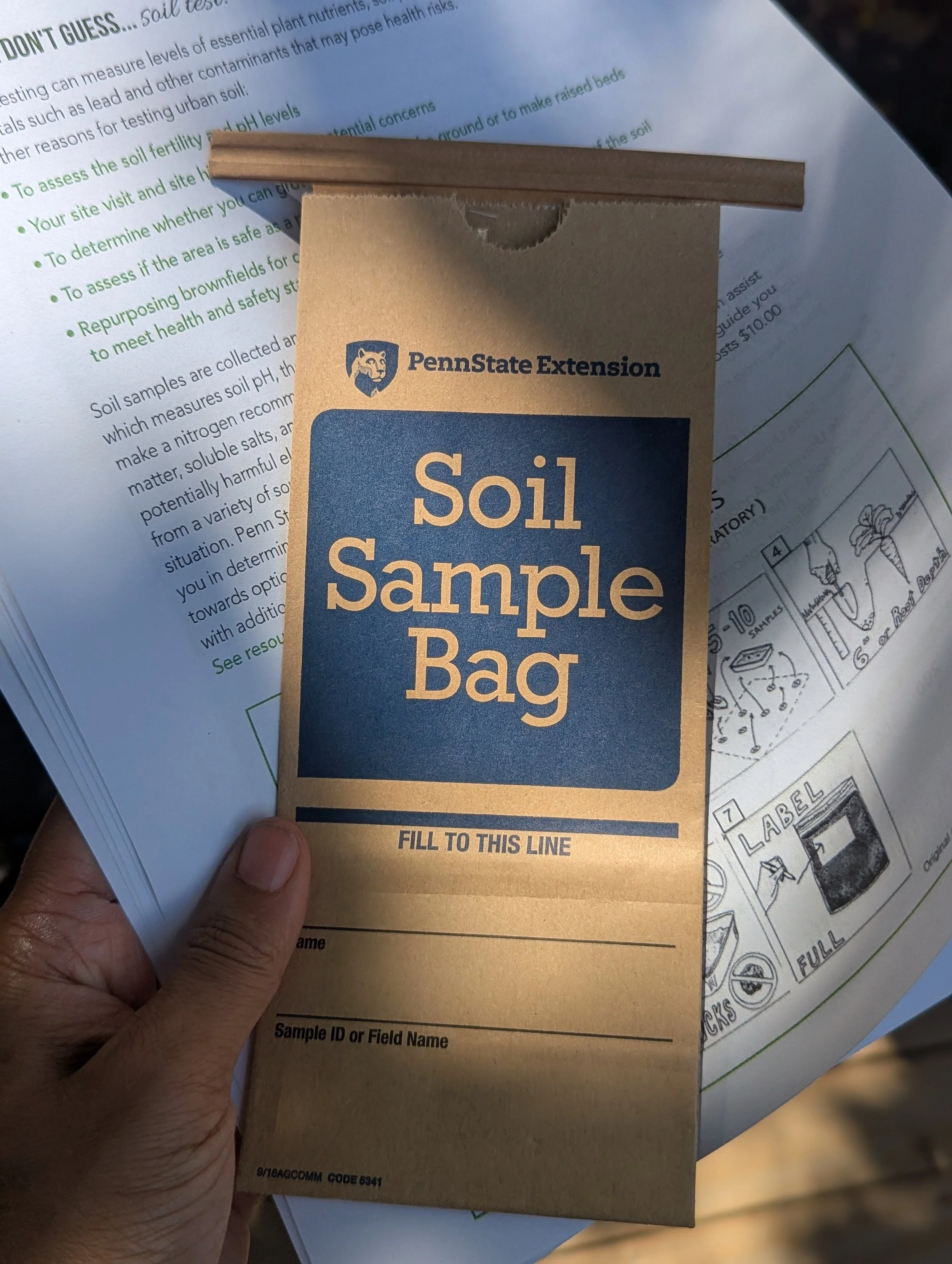
On the form write in 'organic matter' and electroconductivity (EC) for additional testing ($5 each, plus $10 for fertility = $20)
If you provide the crop code, they provide recommendations for fertilizing for your crop specifically
Environmental testing for contaminants like lead and heavy metals
Do this when you start gardening (for a baseline) and every few years
How to pull a sample for soil testing
Where: look at your plot and find major areas (near and far from house, near driveways or streets)
For each area make 10-15 samples at the 6-8 inch point (root depth) holes
For each area, make a composite - mix across your samples
For each area provide only 1 cup, labeled with the area